
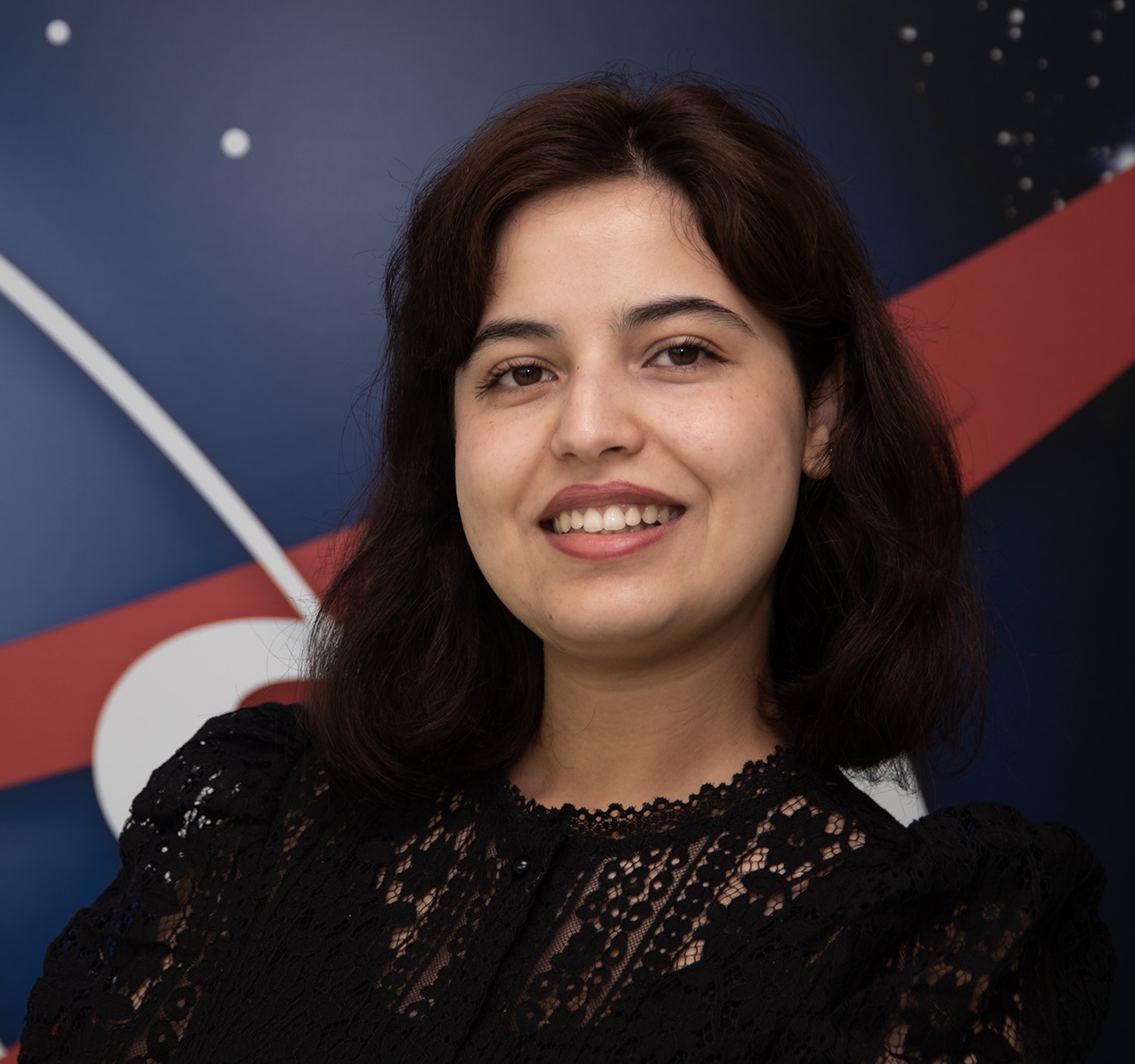
What is your research focus?
My research focuses on understanding how terrestrial ecosystems respond to climate variability and change, with particular interest in regions such as my home country, Morocco, where water availability and increasing temperatures are major challenges. My study focuses on two ecosystems that are especially important to society: urban ecosystems, where most people live and are increasingly exposed to extreme heat, and agricultural ecosystems, which are essential for food security and are highly dependent on limited water resources.
I use satellite observations, meteorological data, and land-surface models to assess how vegetation, soil, water, and the atmosphere interact. In cities, this approach helps determine how vegetation and other land-cover elements can reduce heat, improve thermal conditions for residents, and support greater biodiversity. In agricultural areas, it helps monitor land use and estimate crop water requirements. Ultimately, my goal is to use Earth observations and modeling to provide scientific information that can support more resilient cities, better management of scarce water resources, and sustainable food production in Morocco and other climate-vulnerable regions.

Presenting at the Biospheric Sciences day 618, GSFC-2026
What is one research project that you are particularly excited about, and why?
One project I am particularly excited about examines wheat production and future food security in Morocco. Wheat is a cornerstone of the Moroccan diet, and demand continues to increase with population growth. At the same time, production remains highly dependent on rainfall in a country facing increasing water scarcity and a warmer, drier climate. This creates a growing gap between domestic production and consumption and increases dependence on international markets.
What makes this project particularly meaningful to me is that we went beyond identifying the problem to evaluate potential solutions. We examined how expanding wheat cultivation and irrigation could increase production and estimated how much additional rainfed or irrigated land would be needed to compensate for the projected wheat deficit through 2045. Our results show that irrigation could achieve the required production increase with substantially less additional land than rainfed cultivation. This provides practical, science-based information that can support agricultural planning, water management, and long-term food security in Morocco.
How did you end up working at NASA Goddard?
I first became connected with NASA Goddard through research I was doing as a master’s student at Cadi Ayyad University. I helped process data on impervious surfaces such as roads and pavements and building heights for a collaborative research project involving my laboratory, Mohammed VI Polytechnic University, and the Biospheric Sciences Laboratory at NASA Goddard, led by Dr. Lahouari Bounoua.
In 2023, I met Dr. Bounoua during the defense of my master’s thesis. That meeting became a turning point in my career.
After my master’s degree, Dr. Bounoua became co-supervisor of my doctoral research with Professor Yacoubi at Cadi Ayyad University. He also used part of the project funding to hire me through the Southeastern Universities Research Association (SURA) as an Assistant Research Scientist working at NASA Goddard. Since then, my work at Goddard has become an important part of my doctoral research and scientific development. In particular, I have contributed to the validation and calibration of morphological and physiological parameters used to characterize vegetation in NASA’s Simple Biosphere Model, which simulates energy, water, and gas exchange between the ground and the lower atmosphere.

Inside Code 618: A Day of Science at NASA Goddard
What research accomplishment are you most proud of?
One research accomplishment I am particularly proud of is my work with NASA’s Simple Biosphere Model. I first learned how the model works and how it represents the interactions among vegetation, soil, water, and the atmosphere. I then characterized the morphological and physiological parameters of its vegetation and adapted important aspects of the model to field measurements in Morocco, including optimum temperature ranges related to heat stress and minimum physiological water requirements.
Most importantly, I have used the model to conduct simulations over Morocco and have thoroughly analyzed its outputs to understand how vegetation and ecosystems respond to climate and water availability. This work has provided important scientific results for my research papers and my doctoral thesis. I am particularly proud of having progressed from learning how to use a complex biosphere model to adapting, applying, and interpreting it for environmental questions that are directly relevant to Morocco.
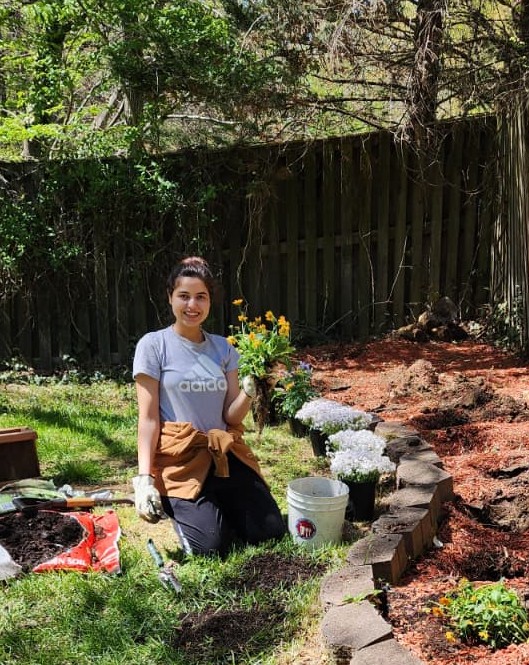
Gardening at home with my housemates.
What skills are most useful to you in your work, and where did you develop those skills?
The skills most useful to me are working with satellite observations, running and analyzing numerical models, and interpreting large environmental datasets. I first developed my foundation in ecology, climate, and data analysis during my studies at Cadi Ayyad University, where I worked with remote-sensing data and environmental observations.
My work with NASA Goddard has greatly strengthened my modeling and computational skills. I learned how to use and analyze NASA’s Simple Biosphere Model, how to characterize and adjust vegetation parameters using observations and field measurements, and how to evaluate model outputs in relation to climate and ecosystem processes. I have also developed strong skills in scientific writing and interpretation through preparing research papers and my doctoral thesis.
Together, these skills allow me to connect satellite observations, field measurements, and modeling to address environmental questions relevant to Morocco.
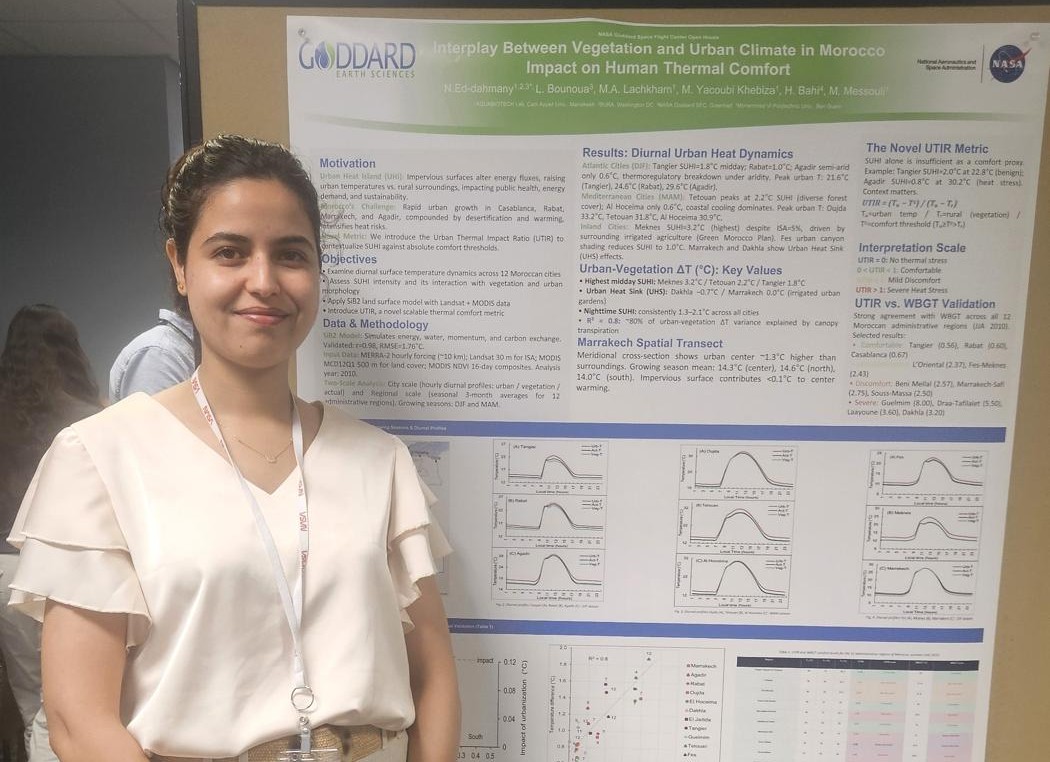
Presentation of my research at the GESTAR II open house, GSFC-2026.
Tell us about a unique or interesting component of your work-life balance.
Outside of work, I enjoy gardening, cooking, listening to music, reading, and being around animals. Since coming to the United States, I have also become very interested in learning about American culture and experiencing everyday life here.
Movies, books, and conversations with people have been enjoyable ways for me to learn more about the culture while also relaxing outside of my research. Cooking is another important part of my work-life balance, especially because it allows me to stay connected to my Moroccan roots and share them with my colleagues, while also discovering new foods and traditions.
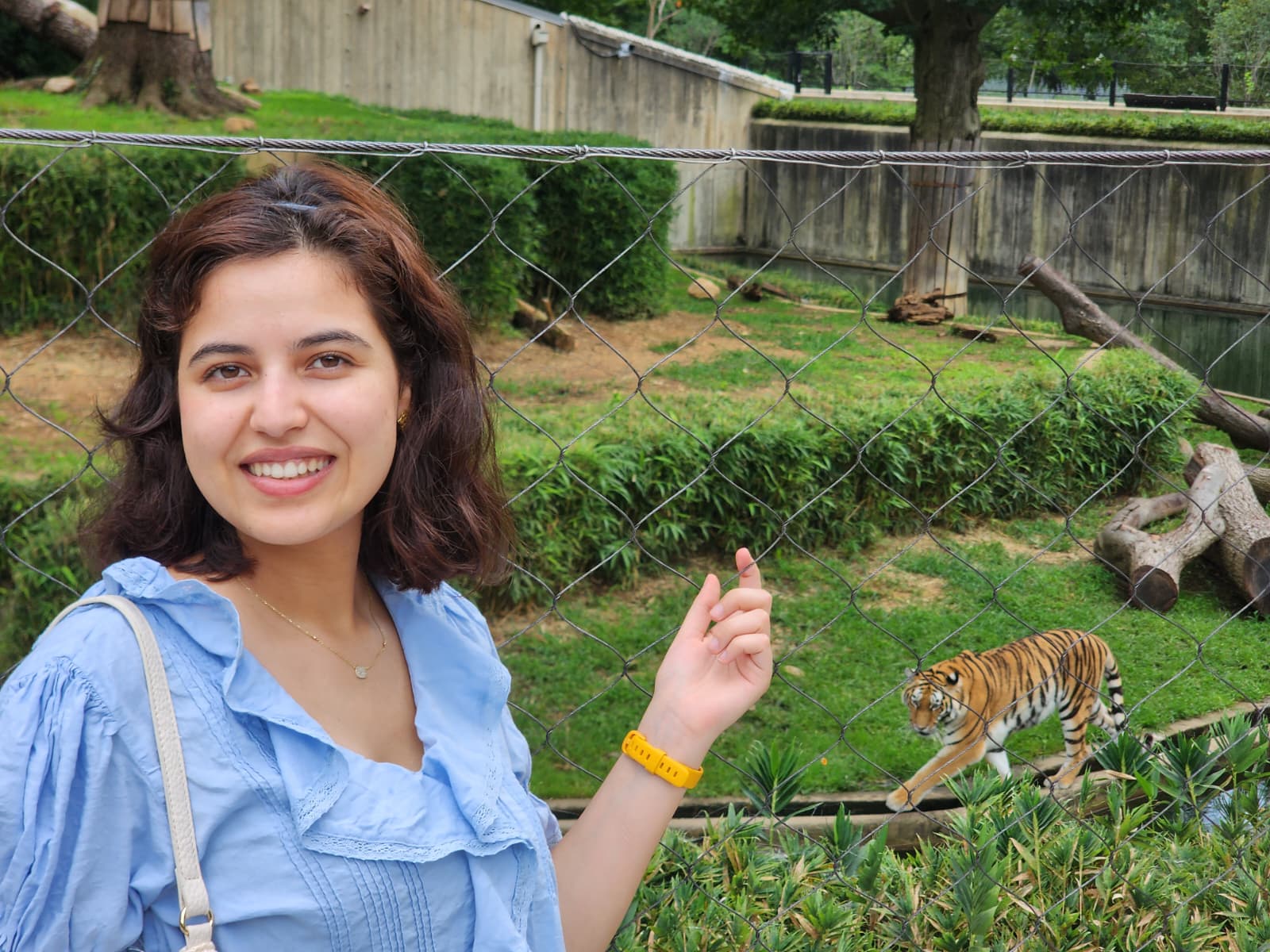
A visit to the Washington, D.C. Zoo
What early career advice do you have for those looking to do what you do?
My advice to early career scientists is to stay curious, be willing to learn new skills, and not be afraid to step outside your original area of expertise. My own research has required me to learn remote sensing, numerical modeling, data analysis, and scientific programming in addition to my background in ecology and environmental science.

Exploring Geospatial Innovation at Esri FedGIS 2026.
Published Date: .
Hometown:
Marrakech, Morocco
Undergraduate Degree:
B.Sc. in Biology, Option: Ecology and Health, Cadi Ayyad University, Marrakech, Morocco
Post-graduate Degrees:
M.Sc. in Biodiversity, Climate Change and Sustainable Development, Cadi Ayyad University, Marrakech, MoroccoPh.D. in Natural Resources Sustainability (in progress), Cadi Ayyad University, Marrakech, Morocco & Laboratory of Water Sciences, Microbial Biotechnologies, and Natural Resources Sustainability (AQUABIOTECH)