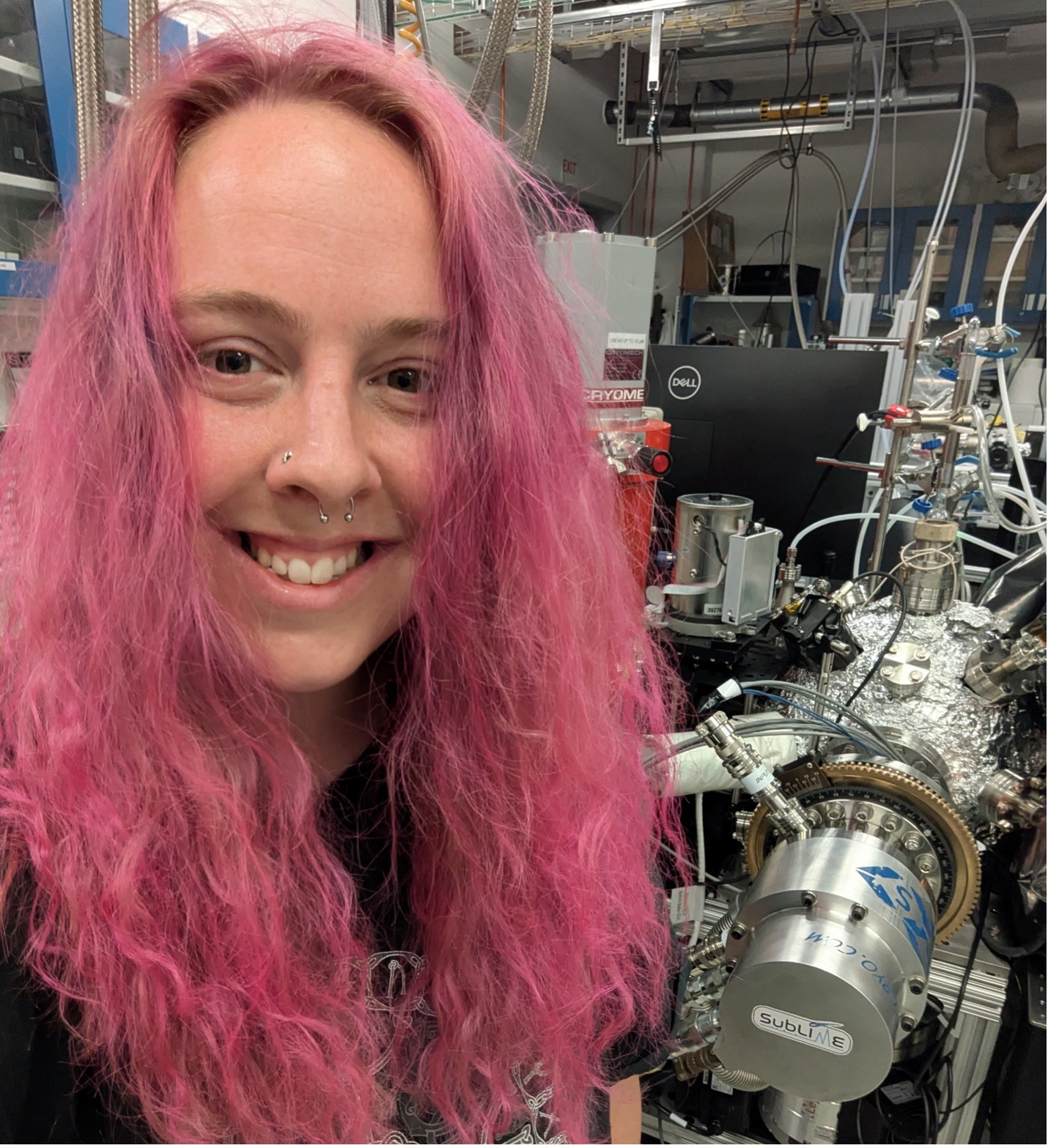
Did you always know that you wanted to be an astrochemist?
Yes and no! I was fortunate to come to the realization that I wanted to do something related to astronomy and physics when I was about 13 years old. I loved space and became infatuated, as so many of us do, when looking through a telescope for the first time! Did I know I’d become an astrochemist? Nope. I was convinced I’d be researching black holes, but something about molecules always interested me. Then I just happened to do a research project during my undergraduate degree which introduced me to the world of astrochemistry, and I never looked back. I was originally doing theoretical/computational work to simulate spectra of small diatomic molecules to aid in the spectral identification of species in astrophysical environments. All I knew was computational astrochemistry until I started my PhD in a lab where I recorded spectra in real-time of astrophysically relevant ices that I deposited inside a vacuum chamber! Now, I would say I’m a fully-fledged experimental astrochemist. This makes sense for me because I never really enjoyed computational work. I much prefer the manual side of lab work and getting my hands dirty! This is also probably why I collect hobbies in my personal life, like crochet, embroidery and tufting. The more the better, as along as my hands are moving and my brain is whirring. Before the wise age of 13, I wanted to be a writer; before that I wanted to be a frog.
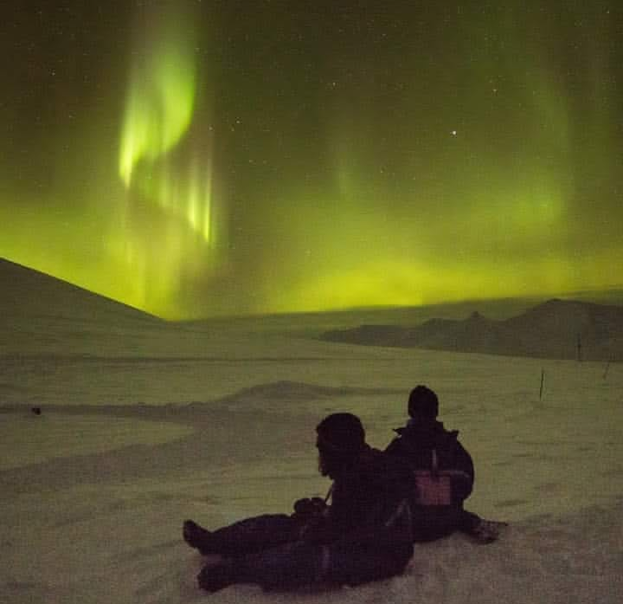
Before astrochemistry, I also dabbled in solar physics. I spent some months living in Svalbard and studying the Aurora. I think I prefer the weather in the Arctic to Maryland.
How did you end up working at NASA Goddard?
By complete accident! It was never in my plan until one day in 2024, I logged onto social media to post some stupid joke about spectroscopy, and I saw an advert for a position in the SubLIME lab. The thought of uprooting my life in the UK as I was just starting to become settled in my career was stressful, but it was too good of an opportunity to miss. After a conversation with my partner, the decision was an obvious one, and I knew I had to at least apply! Bing bang bosh, 8 months passed and I arrived at NASA with two suitcases and an icy dream.
What is your research focus?
Currently, I work in the SubLIME Laboratory. My research focuses on constraining the chemistry of different astrophysical environments such as the interstellar medium, star forming regions and comets! We want to know how and where molecules form and what that means for the chemical evolution of our Universe. In the lab, we deposit molecular ices within an ultra-high vacuum chamber under conditions similar to those in space: very low pressures and very low temperatures! We then expose our ice to UV radiation and monitor any chemical and physical changes which occur in the ice using infrared (IR) spectroscopy and mass spectrometry. After irradiation, we heat the ice so it desorbs from the solid phase into the gas phase. The beauty of the SubLIME lab is that we can also use rotational spectroscopy to monitor the gas phase composition in our chamber, providing a direct link between the chemistry of the solid and gas phases. This also makes it very complicated, but that’s the fun of it!
Right now, I’m using these techniques to study mixed methanol and heavy water (D2O) ices to assess whether ultraviolet (UV) radiation promotes deuteration at specific sites of the methanol molecule. I’m looking at methanol specifically because it’s one of the more dominant components of interstellar and cometary ices. It’s also one of the precursors to the larger, more complex species necessary for prebiotic chemistry. Through the investigation of deuterium-hydrogen exchange between methanol and D2O, our experiments will improve our understanding of how methanol fragments are incorporated into other organic species. This will allow us to determine formation pathways of complex organic molecules in interstellar environments. These experiments will provide further insight into how, where and under what conditions the chemical building blocks of life were formed!
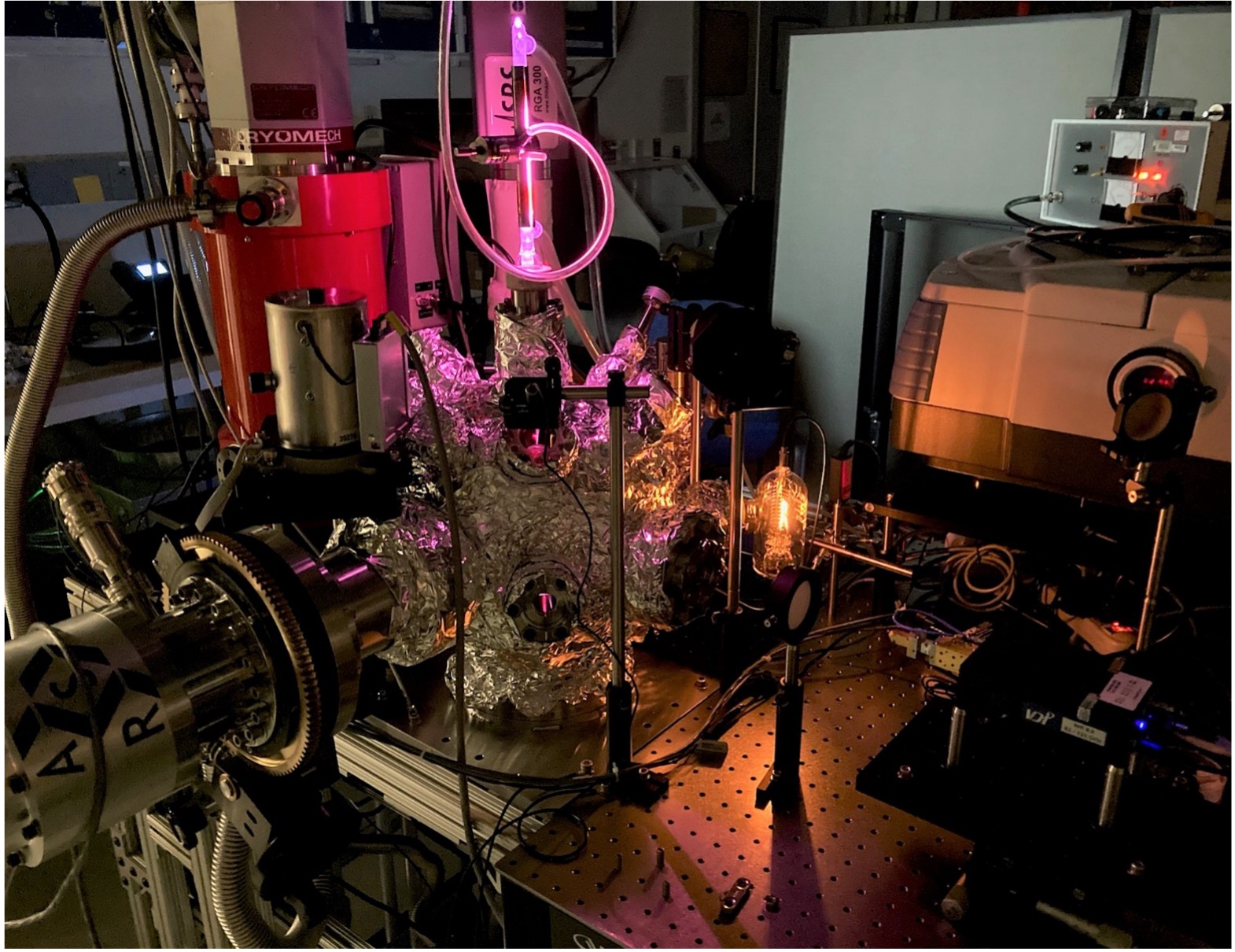
This is what an experiment looks like! An ice deposited inside in the vacuum chamber is exposed to UV light while being monitored with IR spectroscopy and mass spectrometry. The ice is then heated until all molecules are kicked from the surface into the gas phase. We then monitor the composition of the gas with rotational spectroscopy! SubLIME Laboratory, NASA GSFC.
What aspect of your work excites you the most?
Changing pump oil. Just kidding! The lab is like a puzzle, and figuring out how to use all the different instruments together to answer specific science questions is very exciting. I like seeing how other labs do things differently and I love learning new techniques to help improve our research and myself as a researcher. It’s super fun being able to see your data in real-time and then go on to compare it to actual observational data recorded by the Atacama Large Millimeter Array (ALMA) and JWST. Seeing it come full circle is very exciting!
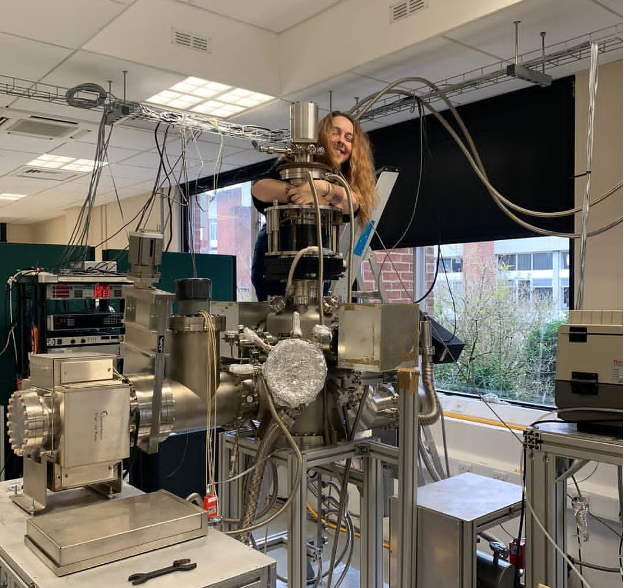
If you treat your lab with love and respect, it will do what you ask it to! Or so I’ve been told. Brown Lab, University of Sussex.
What is one space mission that you are particularly excited about, and why?
Anything to do with icy moons! Like Europa Clipper and Artemis IV. My work is usually focused on the interstellar medium or comets rather than moons or planets, however, I’m deeply intrigued by the chemistry of icy environments on bodies such as Europa and our Moon. Ice is super interesting because it traps volatile species and biosignatures, preserving a record of the chemical and physical history of the environment. Missions to icy moons are exciting to me because they will help us to understand the chemistry of our own Solar System and perhaps even how life came to be.
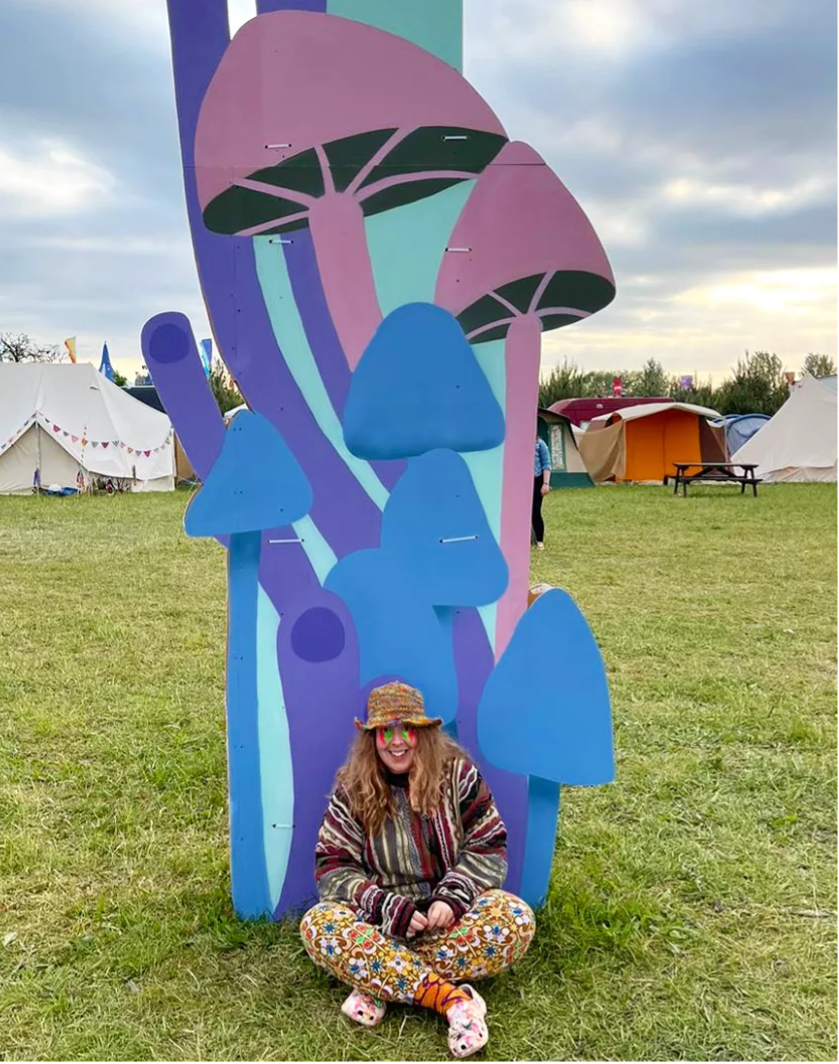
Two of my favourite things: fungi and music festivals!
What is one thing you wish everyone knew about your particular field of science?
Some people will already know this and so maybe this is more of a reminder to myself; lab work can be a cruel beast. It can take up all your time and energy, just for you to get to the end of the day and it feel like it was all for nothing. Things don’t go to plan, things break and maintenance can take a very long time! It can be difficult to stay positive, but there’s generally always a solution. Sometimes that solution is to buy a completely new part or take a step back for a second to re-evaluate. When you finally fix a problem that’s been interrupting your experiments and you start recording data again, it’s all worth it!
What keeps you inspired by your work?
The fact that I don’t know and never will know everything. I can try my best but there will always be new questions to answer and new things to learn. You’d think running experiments would give you the answers you’re looking for, but they often lead you to a million different rabbit holes that you simply don’t have time to explore. The not-knowing inspires me to find out as much as I possibly can!
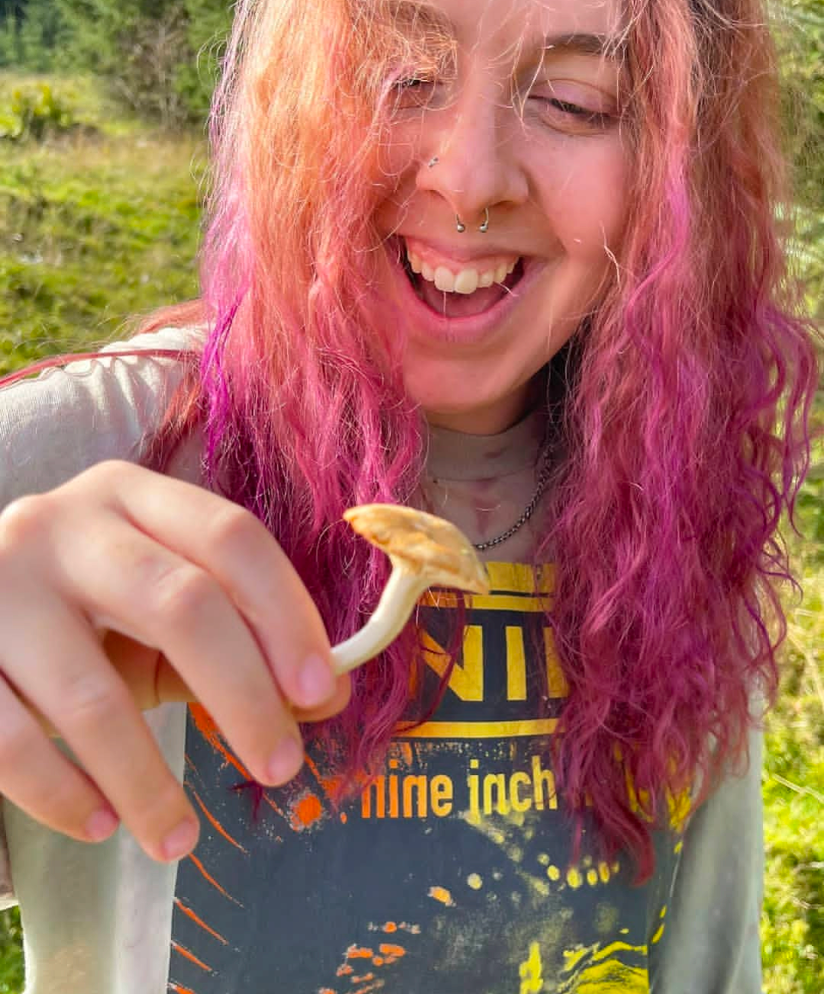
I’m serious when I say I love fungus. My dream job would be studying mushrooms in space!
Published Date: .
Hometown:
Consett, UK
Undergraduate Degree:
MPhys Astrophysics (Integrated Bachelor's and Master's), Aberystwyth University, Wales, UK
Post-graduate Degree:
PhD in Astrochemistry, University of Sussex, UK