
University of Toledo Students to Launch NASA-Inspired Satellite to Monitor Lake Erie Algal Blooms
TOLEDO, OH — University of Toledo graduate and undergraduate students who are part of the Mission EARTH NASA Science Activation funded project, in collaboration with three high schools, are preparing to launch a satellite into space as part of the Dream Big Project, an initiative funded through Near Space Launch and the Don Wood Foundation. The project represents a significant workforce development effort, bridging classroom learning with hands-on space technology experience while preparing the next generation of Earth science and engineering professionals.
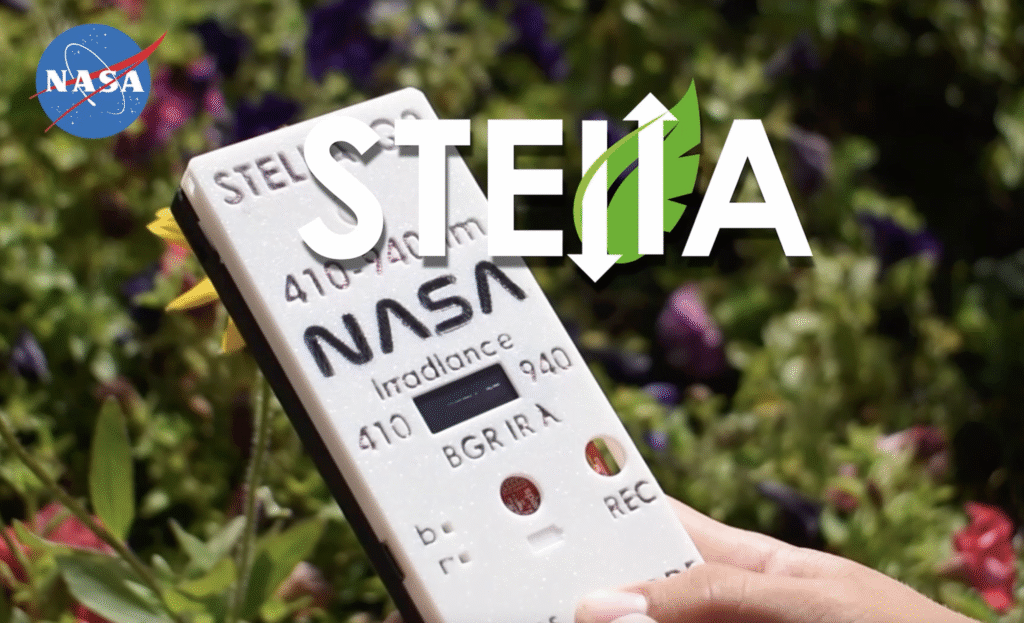
The project, led by Dr. Kevin Czajkowski and project manager Dr. Olawale Oluwafemi, brings together students from the University of Toledo’s Department of Geography and Planning with students and educators from Toledo Technology Academy, Crestwood High School, and Stockbridge High School. The team designed and built satellite instrumentation inspired by NASA’s Science and Technology Education for Land/Life Assessment (STELLA) platform to collect environmental data on harmful algal blooms in Lake Erie and map urban heat islands in the Toledo area.

From Classroom to Space: Workforce Development in Action
The project originated when Near Space Launch invited the University of Toledo to participate as one of six universities in phase one of the Dream Big Project. Dr. Czajkowski, who first encountered Near Space Education through Stockbridge High School students at the American Geophysical Union (AGU) conference, had previously worked with the organization in 2023, when his Digital Image Analysis class built and launched a cubesat on a high-altitude balloon.
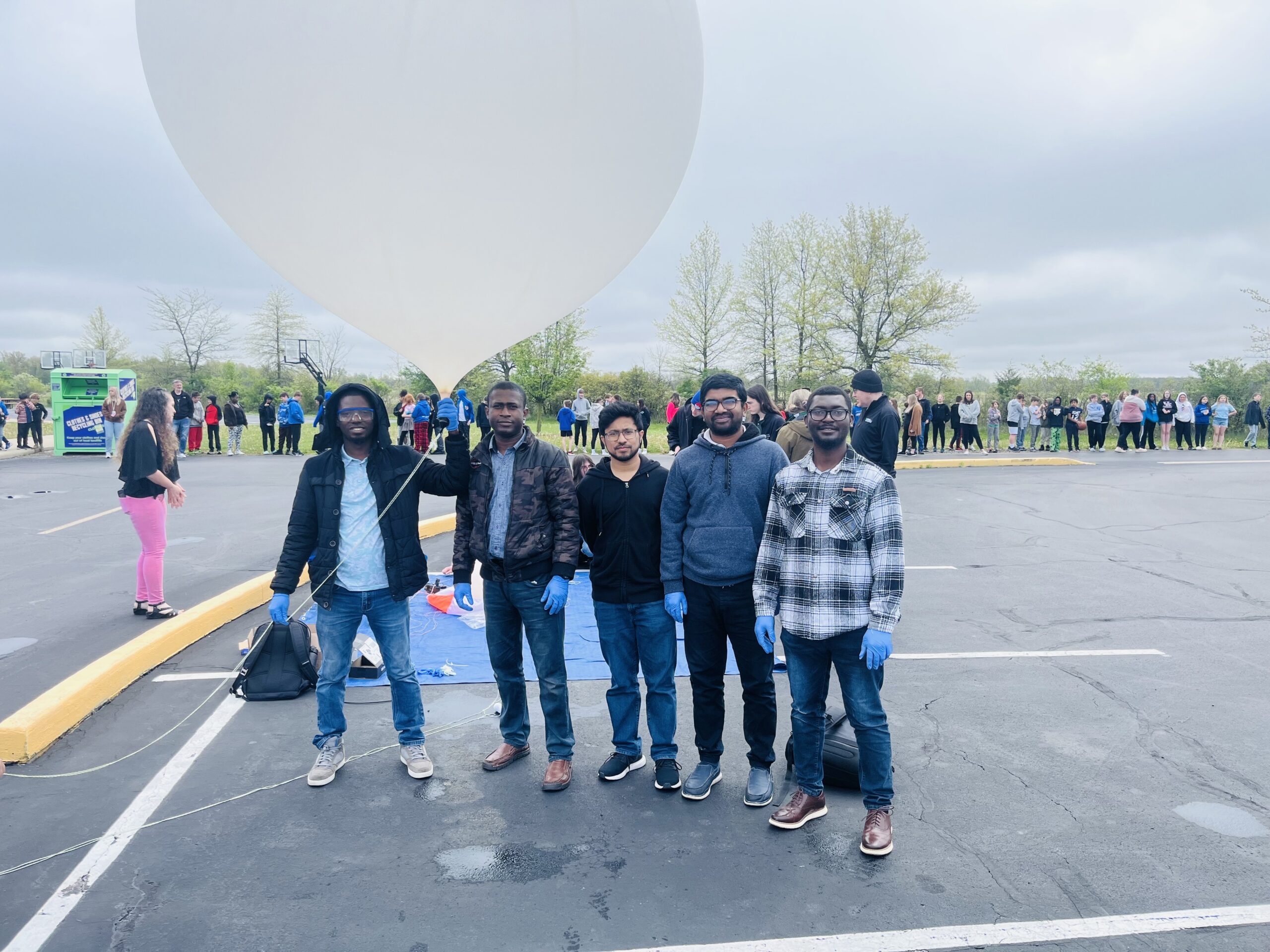


“When Near Space Launch got a grant to do the Dream Big project, they reached out to me to see if UToledo would want to participate,” Dr. Czajkowski explained. “I said yes.”
The year-long project exemplifies modern workforce development by engaging students at multiple educational levels in authentic scientific research and engineering design. University students worked alongside high school teams, with educators serving as team leads and Dr. Czajkowski providing overall supervision.
The University of Toledo team includes: Kali Whitaker, Olawale Oluwafemi (project manager), Md. Faisal Karim (PCB and instrumentation design lead), Elizabeth White, Bethany Boehler, Kazi Kabir, Stephen Yankera, Yusuf Tayo, Cody Graves, Hossain Idrish, Derek Chambers, Pramila Paudyal, Dhananji Karunarathna, Hema Nimmagadda, and Eve Corlett.
High school participation included students from Toledo Technology Academy (teacher Laura Kubiak with students Kei Frey, Alex Marino, Jackson Huise, and Logan Oster), Crestwood High School (teacher Diana Johns with students Hala Komaiha, Noor El Fadl, Maryan Farhat, and Mohammed Ali AlSabeh), and Stockbridge High School (teacher Robert Richards with students Brock Rochow, Jack Hammerberg, and Timothy Handshoe).
“The students did the majority of the coding and designing,” noted the project team, emphasizing the hands-on learning that builds workforce skills in science, technology, engineering, and mathematics (STEM) fields.
Why STELLA?
The team selected STELLA as the foundation for their satellite design due to its straightforward approach and comprehensive documentation—qualities that make it ideal for workforce development and educational applications. “The students were coming up with designs that required a spectrometer and thermal sensor. They wanted to observe the impact of the Normalized Difference Vegetation Index (NDVI) on temperature,” Dr. Czajkowski said. “It was straightforward for me to suggest that they pattern their design after STELLA. There’s no sense in reinventing the wheel.”
STELLA instruments, developed by NASA scientists and engineers in collaboration with university researchers, combine inexpensive sensors with user-friendly software and 3D-printable housings to produce lightweight, handheld instruments. The STELLA components for a given instrument retail for approximately $200, and instrument weight ranges from 33 to 450 grams depending on configuration. All files and instructions for instrument construction and for data acquisition, and programmings are freely available online at https://science.gsfc.nasa.gov/stella/
Elizabeth Blakely-White noted that the step-by-step procedures and graphical explanations on the STELLA website, particularly the schematic diagrams of pin connections, made the platform accessible for students without extensive engineering backgrounds—a crucial factor for workforce development initiatives that seek to broaden participation in STEM fields.
“It was briefly mentioned in a support meeting and our team did more research following,” Blakely-White explained. Dr. Czajkowski added, “I’ve known of STELLA for a long time. I have one in my office that I use with my classes. I first saw it at AGU.”
STELLA instruments measure light spectra over 18 channels in the visible and near-infrared range from 410 to 940 nanometers. The instruments’ small size, affordability, and ease of assembly make them ideal for scientific and educational applications where deployment across many users is important. Some STELLA instruments can be built without any tools at all, by connecting components with inexpensive, commercially available cables.
The team modified the original STELLA design by creating a custom printed circuit board (PCB) and connecting sensors to an Adafruit Feather microcontroller. Engineering student Md. Faisal Karim led the PCB and instrumentation design work, demonstrating the type of specialized technical skills that are increasingly valued in the aerospace workforce.
Scientific Goals and NASA Mission Connections
Spectral Alignment with Landsat
STELLA’s spectroscopic sensor wavelength bands overlap with the spectral coverage provided by sensors on Landsat. Specifically, the sensor bands in STELLA spectrometers at 535, 560, and 585 nanometers fall within the Landsat Operational Land Imager (OLI) instrument’s band 3 (Green, 525–600 nm), while the STELLA sensor bands at 645 and 680 nanometers correspond to Landsat OLI band 4 (Red, 630–680 nm). Similarly, STELLA’s 860 nanometer sensor band aligns with Landsat OLI band 5 (Near-Infrared, 845–885 nm). The spectral alignment between the Landsat and STELLA instruments allows for comparison of measurements within overlapping wavelength bands across different spatial and temporal scales.
While STELLA instruments provide valuable educational and research opportunities, the high-precision, high-accuracy instruments in the NASA Earth Observing fleet cannot be duplicated with inexpensive, off-the-shelf components. The spectral overlap between STELLA and Landsat instruments allows for comparison of measurements of different accuracy and precision across spatial and temporal scales. Validation tests for STELLA instruments are currently under way.
Validation with NASA Earth Observation Data
The team plans to validate their satellite measurements using data from NASA’s Ecosystem Spaceborne Thermal Radiometer Experiment on Space Station (ECOSTRESS) mission. ECOSTRESS acquires high-resolution temperature images of Earth’s surface and has now acquired over 600,000 scenes since completing its In Orbit Checkout phase. The mission measures plant water stress by detecting temperature changes and supports applications including agricultural water management, wildfire mapping, and urban heat monitoring—making it particularly relevant for the team’s goals of studying algal blooms and urban heat islands around Lake Erie and Toledo.
The team may also cross-reference their observations with Landsat satellite imagery. The Landsat program, a joint effort between NASA and the U.S. Geological Survey (USGS), provides continuous measurements of Earth’s land surface with data spanning more than 50 years at 30-meter pixel resolution. Landsat data serves diverse communities including agriculture, fire management, forestry, and water quality management—including algal bloom detection in lakes like Erie.
Additionally, Sentinel-2 imagery from the European Space Agency‘s Copernicus program provides high-resolution multispectral data with frequent revisit times, valuable for monitoring rapidly changing environmental conditions like algal blooms.
Challenges and Lessons Learned: Building Problem-Solving Skills
The year-long project presented several technical challenges that provided valuable workforce development experiences in troubleshooting and adaptive problem-solving. “We had some trouble getting the instruments to work with the emulator. But, we learned that artificial intelligence (AI) could figure out what was wrong,” Oluwafemi noted, highlighting how students gained experience with emerging technologies that are transforming the engineering workforce.
One significant obstacle emerged late in the development process when communication gaps created design challenges. “Near Space was not able to share a physical version of the satellite bus while the teams were designing their payloads,” Oluwafemi explained.
“Therefore, we were going off of schematics on how to make our payload. However, we made a mistake in reading it so we had to hurry and redesign our payload and then pay quite a bit to get it fixed.” This experience taught students valuable lessons about the importance of clear technical communication and documentation in collaborative engineering projects—skills essential for professional success. Near Space has acknowledged that providing the physical bus earlier would have been beneficial to the teams.
Despite these challenges, the team successfully completed their satellite, which has been delivered and awaits launch no earlier than the end of March.
Preparing the Next Generation
Dr. Czajkowski reflected on the educational and workforce development value of the project: “I was hoping to have my Geography students design and build a satellite that was launched into space. The students really have to work hard to figure out how to do this.”
The Dream Big Project represents a collaboration between NASA Science Activation, Near Space Launch, and educational institutions, providing hands-on space technology experience to both university and high school students. By exposing students to authentic research challenges, advanced instrumentation based on NASA missions, and professional collaboration structures, the project builds a pipeline of skilled workers prepared for careers in Earth science, aerospace engineering, environmental monitoring, and related fields.
This workforce development approach—connecting classroom learning with real-world applications, engaging students across educational levels, and providing mentorship from experienced researchers—exemplifies best practices for building the diverse, technically skilled workforce that NASA and the broader aerospace industry need for future missions and Earth science applications. Low-cost, low-complexity instruments make hands-on science and engineering available to researchers, educators, and students with limited budgets, expanding the pool of potential scientists to include a wider range of demographics than possible with limited numbers of expensive instruments.
As the University of Toledo team awaits their launch and prepares to collect data on Lake Erie’s environmental conditions, they are not only contributing to scientific knowledge—they are building the skills, confidence, and professional networks that will define their future careers in STEM fields.