
Field of View with Pizza, Calibration & Differential Measurements
Video Summary
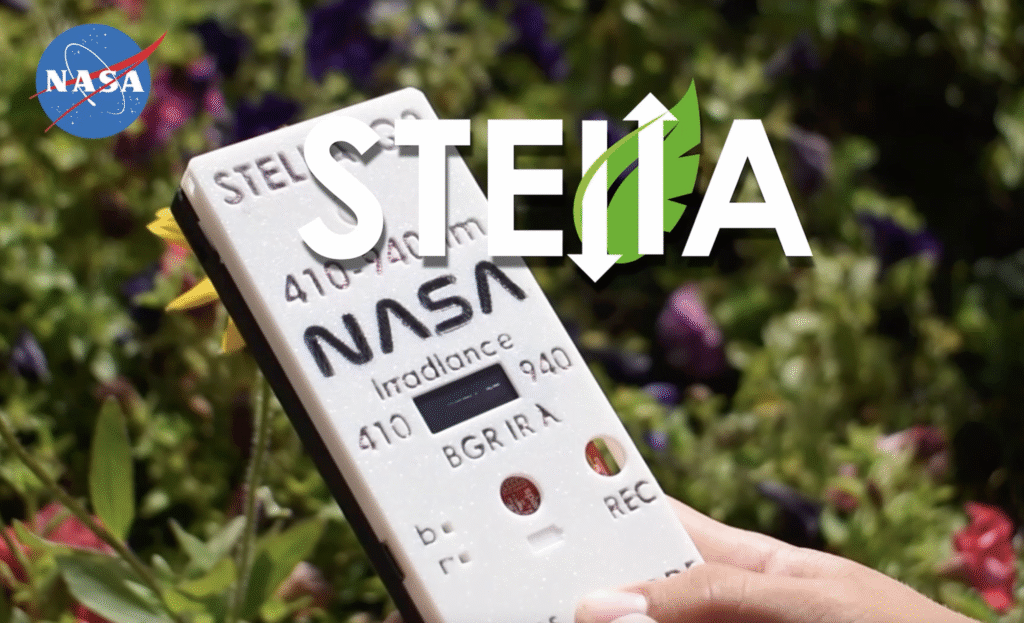
Paul Mirel, creator and lead engineer of STELLA, explains the critical importance of field of view in optical sensor design. He describes how STELLA uses optical sensors to measure different wavelengths of light, emphasizing that field of view directly impacts the quality and specificity of measurements. Using an intuitive pizza analogy, Mirel explains that a narrow field of view allows you to focus on specific details (like seeing the green of individual peppers), while a wide field of view averages everything together into a mixed result. For STELLA’s non-imaging sensors with single photodiodes, this means the difference between getting detailed, useful data versus generalized averages that may obscure important information.
Mirel discusses the evolution of sensor calibration, noting how modern sensors with built-in microcontrollers and factory calibrations provide much greater accuracy than was possible decades ago. However, for even better precision, custom calibration requires controlled light sources and neutral density filters that reduce brightness without changing color properties. He introduces a practical measurement technique using white polystyrene foam as a reflective reference standard, chosen specifically because it maintains consistent white reflection from all viewing angles, unlike materials that might appear different colors depending on the observation direction.
The video concludes with Mirel emphasizing the fundamental importance of differential measurements in both science and engineering. Using relatable examples – from the historical discovery of infrared radiation using thermometers to checking a child’s fever after doing dishes with hot water – he demonstrates how comparing measurements against references eliminates environmental variables and provides more accurate results. This principle applies directly to STELLA’s operation: by measuring the styrofoam reference before and after measuring a target (like plant vegetation), researchers can account for changing light conditions and extract the true spectral signature of their subject, making their scientific measurements far more reliable and meaningful.
Transcript
STELLA uses optical sensors to measure different wavelengths of light.
And you need to consider,
the field of view when you’re designing
these optical instruments.
What might go wrong
if the field of view is too wide
or too Narrow on a STELLA sensor.
I’ll rephrase that a little bit.
How does how does the field of view affect
what you’re doing?
if you have a really narrow field of view,
what that means is if you’re,
at some height above the thing
that you’re looking at, which you’re
sorry,
you’re not going to look at it, right?
Smacked against your face.
You’re going to look at you’re going
to be able to see stuff in a narrow area.
And if you have a large field of view,
that area is going to be really large.
For non imaging sensors,
like the ones we have in Stella
where there’s just a single photodiode
collecting light,
it’s going to average everything
it sees in that circle.
So if you are way up in the air,
looking down at a field and a parking lot,
it’s going to average the color
or the light intensity or the temperature
of that field in that parking lot.
So that you will get less information,
like looking down at a pizza
with a single single pixel sensor.
If you take in the whole pizza
and you average it out.
Is it going to be yellow or red
or green from the peppers?
It’s going to be
all of those mixed together.
Whereas if you get closer
or you have a narrower field of view
and you can zoom in
on a particular piece of pepper,
the pizza will
look more green in that area.
How the sensors that we start the
that are calibrated, that we start with.
Okay. Okay.
So most of the sensors that we use
have built in microcontrollers in them.
And they’re calibrated at the factory,
and then the calibration is programed
into their little microcontroller.
So when you ask the sensor for value,
it reads the value
and then looks up the calibration
and then gives you the corrected value.
So that lets us get much more accurate
than we could get ten, 20, 30 years ago.
Just because they have built
in calibrations.
If we want a better calibration,
we’re going to have to do that ourselves.
And so we’ll need a light source
that we understand how bright it is.
We’ll need ways of
cutting down a light source
without changing the color of that light.
Those are neutral density filters
or gray across the whole spectrum.
one of the things that we
can do to make our measurements
more accurate
that anyone can do,
is to look at a reflective reference
and then look at the thing
you’re trying to measure,
and then look at that
reflective reference again.
So we want a, a, reflective
reference that will give us
as much light back as possible.
So we use, white polystyrene foam.
And we like polystyrene foam because it’s
kind of white from whatever direction
you look at it.
In fact, in kind of white, it’s white
from whatever direction you look at it.
And we’re making a measurement of just
how well,
spectrally it works at different angles.
Like if you have a velour type fabric,
you might get more
of a blue from one direction
and more of a red from another direction.
That would be not a good reference
surface.
So, what you want to do is
look at the styrofoam.
Look at the thing
you’re trying to measure.
And then subtract those measurements
because the styrofoam tells
you how bright it is outside.
If you’re in the shade
or cloth goes over the sun.
Or it’s just later in the day,
you’re going to have less light available.
So you don’t want to make a measurement
that is just a measurement
of the total light available
from that plant that you’re looking at.
You want to look at the total light
available from the styrofoam,
and then look at the total light available
from the plant and subtract them,
so that you know
what’s coming back from the plant.
In any science and pretty much
any engineering, differential measurements
are going to be really important.
So, the way that they figured out
that there was infrared,
was they, they put a thermometer in the,
part of the spectrum
that was below
the red just to see what would happen.
And the thermometer heated up,
but they took the thermometer
out of the infrared and it cooled down,
and they put it back in the infrared,
which they didn’t know was there.
They were just guessing.
They put it back in.
They looked to see if it if it warmed up.
So, suppose that you are doing the dishes
and so you’ve got your hands
immersed in the warm water.
So your hand temperature is
really different from what it normally is.
And let’s say your
kid’s sister
or kid brother comes up to you
and says, I’m not feeling so well.
Can you check my temperature?
And you put your hand on their forehead.
Your hand is all hot from the water,
so you won’t be able to tell
what their forehead temperature is like,
because your hand temperature
is all confused.
So what you do is you say,
all right, go get your other twin
brother or sister,
not twin, just any old brother or sister.
And bring them over.
And you say, all right,
so this person is maybe feeling ill
and this person is feeling fine.
So if I check with whatever temperature
my hand is,
if I check the forehead on this one,
and then I check the forehead on that one,
and I see that there’s a difference,
I can say, all right.
This person who has a warmer
forehead, it’s maybe not feeling so well.
Maybe they do have a fever.
Whereas if the
temperatures are the same, you can say,
you know, I don’t think you have a fever.
You might not be feeling good
for some other reason,
but you might not have a fever.