
Hydrological Sciences (617) Home

For further information, data, research, and other resources, see Hydrological Sciences Research.


Featured Video

Freshwater Losses in the Middle East

Press Releases & Feature Stories

NASA Builds Sophisticated Earth-Observing Microwave Radiometer

06.05.2013
A NASA team delivered in May a sophisticated microwave radiometer specifically designed to overcome the pitfalls that have plagued similar Earth-observing instruments in the past.

NASA Data Pinpoints Glaciers' Role in Sea Level Rise

05.16.2013
99% of Earth’s land ice is locked into the Greenland and Antarctic ice sheets. But from 2003–2009, the world’s other glaciers contributed equally to sea level rise as the two ice sheets combined.

NASA Satellites Find Freshwater Losses in Middle East

02.12.2013
A new study using data from a pair of gravity-measuring NASA satellites finds that large parts of the arid Middle East region lost freshwater reserves rapidly during the past decade.
NASA meatball

NASA, Colorado State University Volunteer Network Invite Public to Free Webinar

02.06.2013
NASA and the Community, Collaborative Rain, Hail, and Snow Network run by Colorado State University, Fort Collins, invite the public to participate in a free webinar to promote citizen science...

Despite Rain, Drought Lingers in the United States

01.19.2013
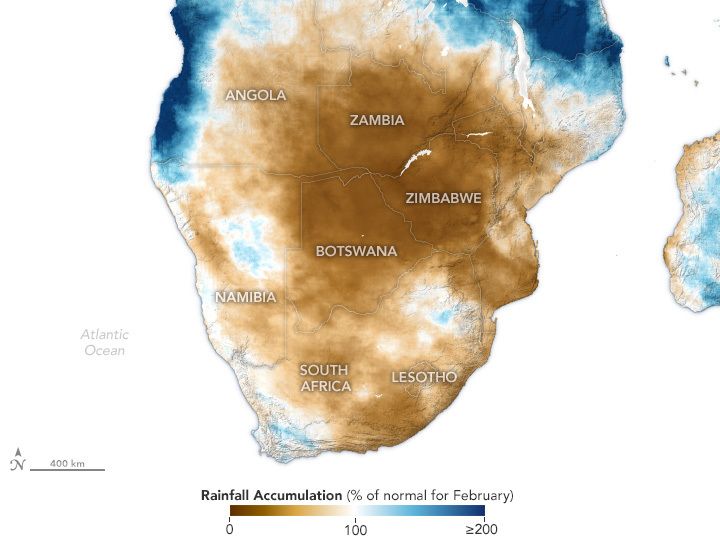
The deep drought in the United States that has fueled wildfires, damaged crops, and caused near record-low water levels on the Mississippi River has lingered well into January.
See all Press Releases & Feature Stories »

Laboratory News

There are no Laboratory news items at this time.

More Laboratory News »

Overview

The Hydrological Sciences Laboratory examines the role of water in the Earth system. Laboratory researchers strive to better understand, quantify, and analyze the hydrological cycle and to measure hydrological processes in order to improve prediction of the response of global hydrology to anthropogenic and/or natural climate change.

Special emphasis is placed on land surface hydrological processes and their interactions with the atmosphere. Laboratory scientists develop remote-sensing and modeling techniques to investigate how the various components of the hydrological cycle interact over a broad range of spatial and temporal scales.

Contact Us

Dr. Matthew Rodell
301.286.9143
matthew.rodell@nasa.gov

General inquiries about the scientific programs at NASA's Goddard Space Flight Center may be directed to the Center Public Affairs office at 1.301.286.8955.

                                                                                                                                                                                        
NASA Logo, National Aeronautics and Space Administration