

Climate and Radiation (613) Home

The Climate and Radiation Laboratory investigate atmospheric radiation, both as a driver for climate change and as a tool for the remote sensing of Earth's atmosphere and surface. The Laboratory research program seeks to better understand how our planet reached its present state, and how it may respond to future drivers, both natural and anthropogenic.

> Learn More

Featured Video

Flyby Animation of Tropical Cyclone Sandra

Press Releases & Feature Stories

Wildfires in Southwestern Alaska

06.18.2013
On June 16, 2013, the Moderate Resolution Imaging Spectroradiometer (MODIS) on NASA’s Terra satellite captured this image of wildfires burning in a remote part of southwestern Alaska.

Breakup Continues on the Wilkins Ice Shelf

05.30.2013
Many ice shelves fringe Antarctica, including the Wilkins Ice Shelf on the Antarctic Peninsula, which underwent a series of breakup events in ‘98, ‘08, and ‘09.

Alaska's Pavlof Volcano Erupts

05.16.2013
For the third time this century, Alaska’s Pavlof Volcano is erupting.

Team WIns Cubesat Berth to Gather Earth Energy Imbalance Measurements

05.16.2013
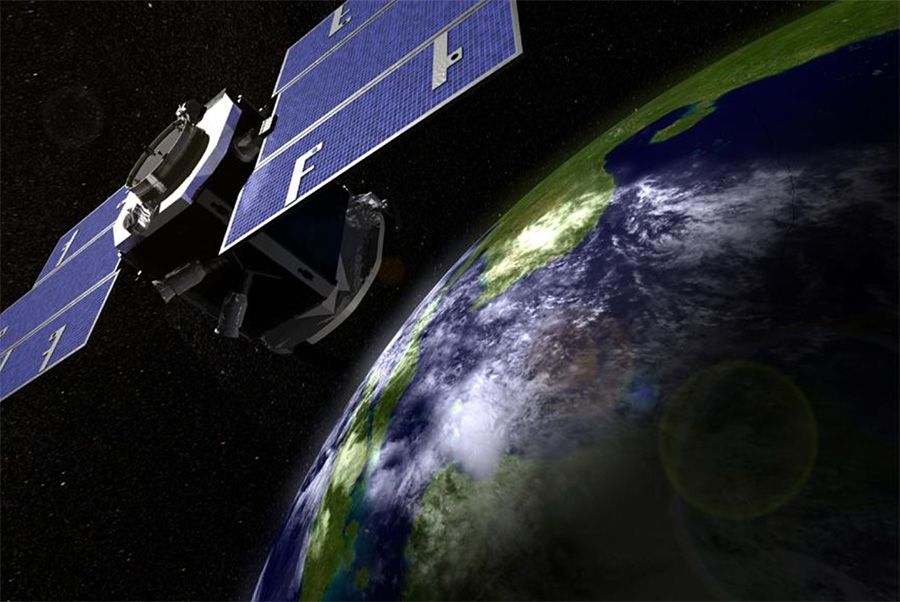
A team of scientists has won a berth on a tiny satellite to explore one of NASA's last frontiers in climate studies: the imbalance in Earth's energy budget.

LDCM Arrives in Final Orbit

05.15.2013
The Landsat Data Continuity Mission offers a look at Earth from space with a crisper view than our eyes alone would be capable of.
See all Press Releases & Feature Stories »

Laboratory News

Scientist interviews in The Baltimore Sun

04.12.2013
An article entitled, "Tracking the long-distance travels of dust: Scientists find huge plume from overseas, eye climate effect" featuring interviews with Hongbin Yu (UMCP-ESSIC/613), Lorraine Remer (UMBC), and Tianle Yuan (UMBC-JCET/613) appeared in The Baltimore Sun, April 12 online edition.
More Laboratory News »

Overview

The Climate and Radiation Laboratory seeks a better understanding of Earth's climate on all time scales, from daily, seasonal, and interannual variability through changes on geologic time scales. Our research focuses on integrated studies of atmospheric measurements from satellites, aircraft and in-situ platforms, numerical modeling, and climate analysis.

We investigate atmospheric radiation, both as a driver for climate change and as a tool for the remote sensing of Earth's atmosphere and surface. The Laboratory research program strives to better understand how our planet reached its present state, and how it may respond to future drivers of change, both natural and anthropogenic.

Contact Us

Cathy L Newman
301.614.6183
Administrative Analyst [613]

General inquiries about the scientific programs at NASA's Goddard Space Flight Center may be directed to the Center Public Affairs office at 1.301.286.8955.

                                                                                                                                                                                        
NASA Logo, National Aeronautics and Space Administration